Monthly Archives:

Monthly Program: The Socialite and the Sea Captain – Louise Arner Boyd and Captain Bob Bartlett on the 1941 Arctic Voyage of the Effie M. Morrissey

Sunday, June 20,  2:00 pm
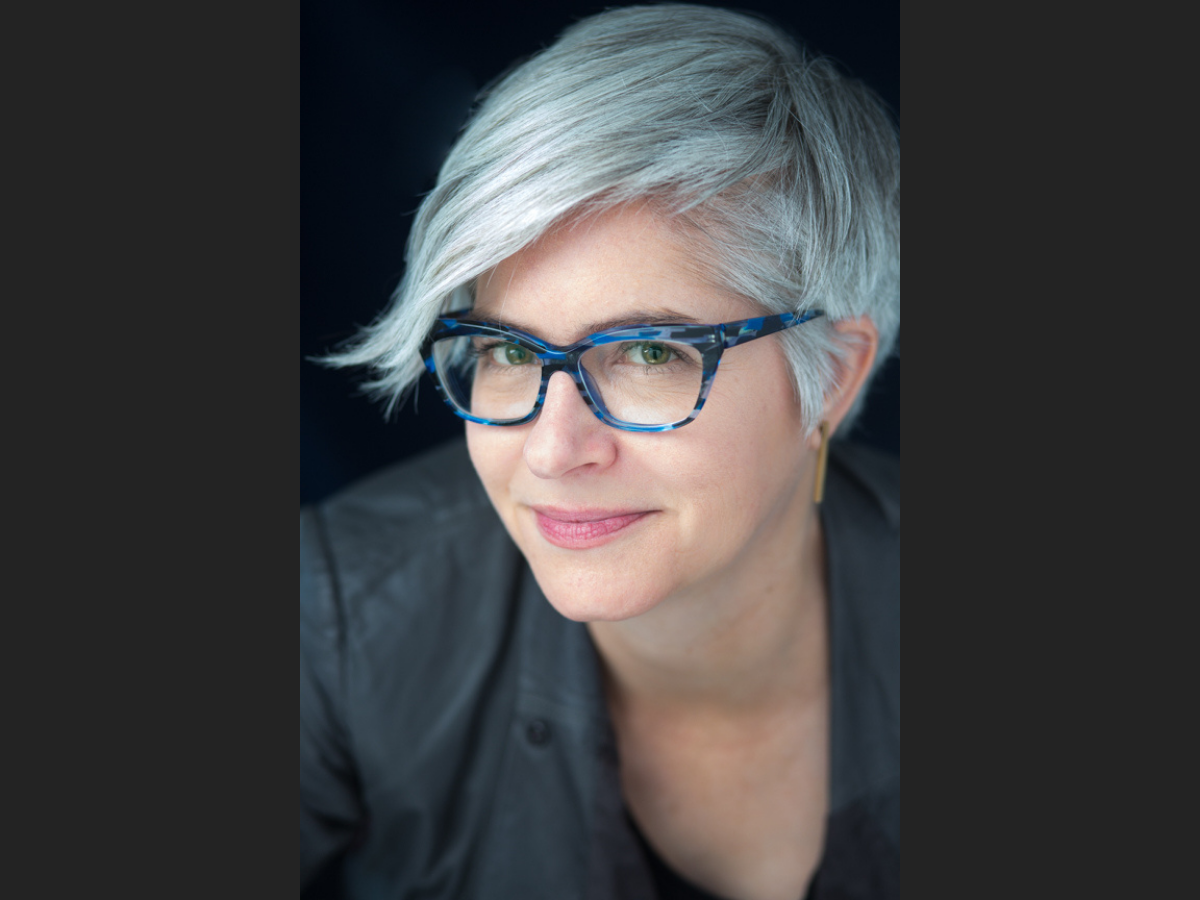
David Hirzel presented

A talk by David Hirzel on the prickly relationship between the socialite and the sea captain on his famous schooner Effie M. Morrissey. When war threatened U.S. neutrality in 1940,

Read more ›


California and the West Events

Fall 2020: Revealing San Francisco’s Hidden 19th-Century Black History: A Tour of California Historical Society Artifacts, lecture by Susan D. Anderson, SF History Days (video here)

Summer 2020: Harlem of the West: The Fillmore Jazz Era and Redevelopment, online lecture by Elizabeth Pepin Silva

Fall 2019: An event-filled two-day excursion to Sacramento

Fall 2019:  Tour of Marin Civic Center and presentation by member Bonnie Portnoy on The Man Beneath the Paint: Tilden Daken

Summer 2019: Reading of Judith Offer's play, Scenes from the Life of Julia Morgan

Fall 2018: Public Program, "South Asians in the South Bay: The Privileged Immigrants"

Spring 2018: Excursion to Niles area of Fremont with historic train ride and silent film museum

Spring 2018: The California and the West study group initiated the two public programs on "The Future of the Past in the Digital Age" and Benjamin Madley's talk on An American GenocideThe United States and the California Indian Catastrophe, 1846–1873.

Fall 2017: Martinez Adobe Fandango; Public Program: “Siberia and California: Connections During the Russian Revolution and Civil War”

Fall 2016: Amador County

Summer 2016: San Francisco Presidio

Winter 2016: Berkeley History Center

Spring 2015: Sonoma Plaza

Winter 2015: San Francisco Public Library

Summer 2014:  Red Oak Victory and World War II Homefront National Historic Park, Richmond

Spring 2014:  Los Gatos History Museum, "American Bohemia: The Cats Estate in Los Gatos”

Winter 2014:  Tour of California Historical Society exhibition on Juana Briones, January 25

Summer 2013:  Green Gulch Farm Zen Center visit, August 15

Spring 2013: Visits to Vallejo Naval and Historical Museum and the McCune Collection at the Vallejo Public Library, April 13

Writers Group Upcoming Meetings

Saturday, April 4 am, via Zoom. Liz Thacker-Estrada will present.

Public Programs

Sunday, August 21, 2:00 pm, Public Program via Zoom.
Writing and Revising Narrative History
A Presentation by Megan Kate Nelson
Join the Mechanics' Institute and the Institute for Historical Study for this exciting talk about writing with historian Megan Kate Nelson who left academia in 2014 to become a full-time writer. During this Zoom event, she will offer advice for writers who want to publish trade history books and other pieces for general readers. Dr. Nelson will talk about how to make the transition from academic to narrative history writing, how to revise manuscripts for trade publication, and how to pitch articles and Op-eds to newspapers and magazines.
Megan Kate Nelson is a historian and writer, with a BA from Harvard and a PhD in American Studies from the University of Iowa. She is the author of four books: Saving Yellowstone: Exploration and Preservation in Reconstruction America (Scribner 2022); The Three-Cornered War: The Union, the Confederacy, and Native Peoples in the Fight for the West (Scribner 2020; a finalist for the 2021 Pulitzer Prize in History); Ruin Nation: Destruction and the American Civil War (Georgia, 2012); and Trembling Earth: A Cultural History of the Okefenokee Swamp (Georgia, 2005). She writes about the Civil War, the U.S. West, and American culture for The New York Times, Washington Post, The Atlantic, Smithsonian Magazine, and TIME. Before leaving academia to write full-time in 2014, she taught U.S. history and American Studies at Texas Tech University, Cal State Fullerton, Harvard, and Brown. She grew up in Colorado but now lives in Boston with her husband and two cats.
Next Monthly Program

Saturday, June 20, 10:00 am, Monthly Program via Zoom.
What Is Fire? 
A presentation by Jim Gasperini

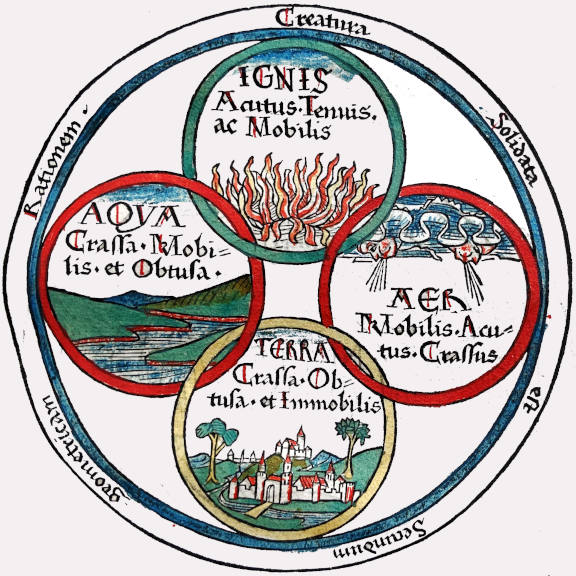
A diagram of the four elements for a 1472 edition of "De natura rerum"
For millennia natural philosophers, alchemists, and finally scientists closely studied nature and struggled to answer the simple question: “What is fire?” Some took a purely secular approach, examining fire and matter from a mechanical or chemical point of view. Others hoped that by studying how parts of the world fit together they could better understand the mind of the divine being who created it and may guide its workings still. A classic idea, independently devised in many cultures around the world, imagined that matter is made up of a small number of elementary substances, one of which is fire.

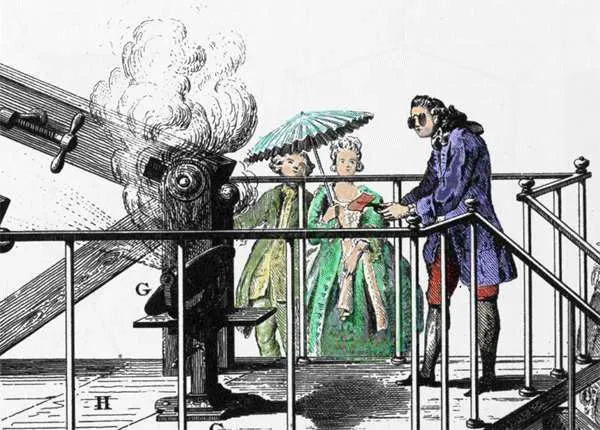
Antoine Lavoisier conducting an experiment
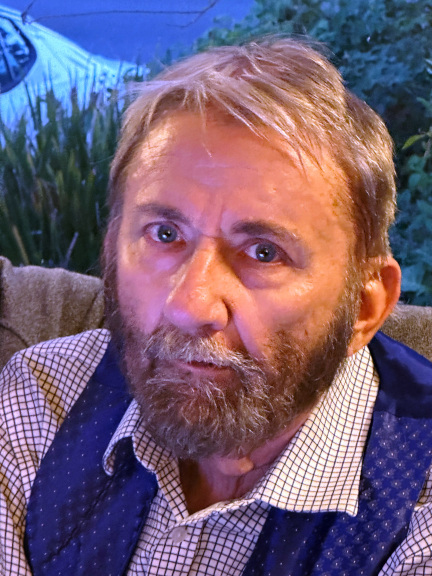
Jim Gasperini explores the long journey to understanding fire as a physical phenomenon: how we got from the notion of fire as an element to the modern conception of combustion. He shows how our modern understanding finally emerged from a dramatic competition among English, Swedish, and French scientists in the late eighteenth century.   Jim Gasperini is the Institute's webmaster and former Vice-President of its Board. This presentation is based on a chapter from his book, Fire in the Imagination: from the Burning Bush to Burning Man. See more about Jim’s background and his work in progress at https://jimgasperini.com.
You are welcome to invite friends and colleagues to attend.
The presentation will be recorded, and posted on YouTube. If you don’t want to be on the recording, just make sure your video is off. And please remember to mute your microphone!
You are welcome to invite friends and colleagues to attend.
The presentation will be recorded, and posted on YouTube. If you don’t want to be on the recording, just make sure your video is off. And please remember to mute your microphone!

About Us

The Institute for Historical Study is a community of researchers, writers, and artists. Our common bond is a devotion to history in its many forms. Through wide-ranging programs, we share research, ideas, and practical advice and provide a public forum for the discussion of history. 

Read More...


We Promote:

  •  the study and discussion of history outside the traditional classroom setting
  •  research, writing, performances, exhibitions, and other expressions of historical study
  •  non-traditional and interdisciplinary areas of study as well as traditional approaches to history


Member News

Members on the presentation circuit. . .
Bert Gordon and Suzanne Perkins celebrated Valentine’s Day on February 14th with Bert giving a presentation “Valentines and Chocolate: Their Connections through History” at the Contra Costa County Library in Orinda. The talk covered the history of Valentine’s Day, whose origins appear to date back to pre-Roman pastoral festivals; the history of chocolate from Mayan times to the present; and, lastly, the marriage of the two in the mid-19th century. The Ghirardelli & Girard Confectionery Company began in San Francisco in 1852. Richard Cadbury is said to have produced the earliest heart-shaped box with Cupids and rosebuds for Valentine’s Day in 1861. The modern chocolate era has been said to have begun with the development of milk chocolate by Daniel Peter in 1875 in Switzerland. Through the 20th and into the 21st centuries, chocolate was given as a Valentine’s gift from men to women, though increasing numbers of women in recent years are gifting chocolate for the holiday. The talk was followed by a chocolate tasting at the library.
Peter G. Meyerhof gave a presentation titled “Mapping the Northern End of the Camino Real” on April 18th at the Annual Conference of the California Missions Foundation, held in conjunction with the 250th anniversary of the founding of Mission Dolores. The path of the Camino Real connecting the 21 missions in California has long been a topic of interest. The portion of the trail north of San Francisco that linked Mission San Rafael and Mission San Francisco Solano in Sonoma has been less studied. Some of the trail can be inferred from diaries, diseños (maps), and even from LIDAR. The last portion of the trail as it crossed the ridge of the Sonoma Mountains into the Sonoma Valley can now be predicted from an 1847  survey and testimony in a land claim deposition that sheds light on the route.
Elizabeth Schott continues to get the word out regarding the subject of her forthcoming book, Dorothy Liebes. She gave two talks in April: “Dorothy Liebes and the Healing Power of Weaving” to the Redwood Guild of Fiber Arts and “Useful and Beautiful: Modernism, Dorothy Liebes and the Decorative Arts at the 1939 Golden Gate International Exposition.”
—Rose Marie Cleese

Members:  Please submit news of your history-related publications, lectures, awards, research finds, etc. to info@instituteforhistoricalstudy.org.

Join Us

We welcome all men and women who have a commitment to historical study, which may be demonstrated in one or more of the following ways...

Read More...

Contact Us

Institute for Historical Study
1399 Queens Road
Berkeley, CA 94708
IHS Admin

Name

Top