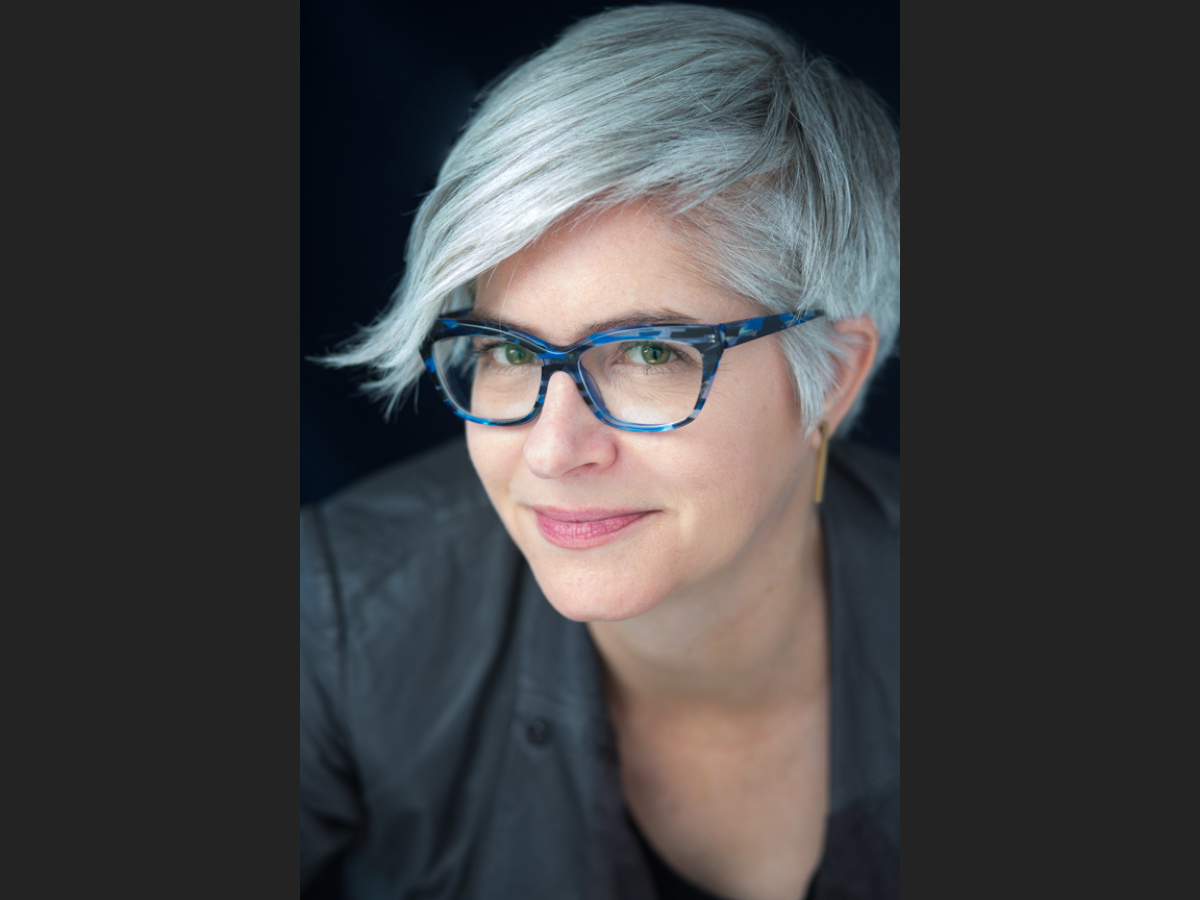
The latest person to join our ranks is Kenneth Bernstein, a nationally known blogger and writer. He has extensive experience as a secondary school teacher in various fields of history: general history, religious history, music history, and environmental history. He is also interested in political and economic history. He earned a BA in music at Haverford College in Haverford, Pennsylvania; an MA in religious studies from St. Charles Borromeo Seminary in Philadelphia; and an MA in teaching from Johns Hopkins University in Baltimore. He says, “During the school year, I am a consumer rather than a producer per se of history. I do a fair amount of research and that informs my teaching and some of what I write online.”
Bert Gordon gave a pair of lectures at the annual reunion of the Mills College Alumnae Association in September. The first presentation he gave was titled “History of Tourism: From the Grand Tour to the Present.” Tourism, he noted, is much more encompassing than merely the organized tourist industry. The word “tour” came into popularity with the 17th-century “Grand Tour,” when affluent northern Europeans, generally male, visited the sites of classical antiquity as part of their education. Most international tourists were European and, later, American. Yet Chinese admiral and diplomat Zheng He made seven voyages from China to North Africa and the Middle East between 1405 and 1433, building trade networks. However, his travels did not result in Chinese colonization such as occurred in the case of European explorers, beginning with Columbus, in the Western Hemisphere. His second talk concerned one of the Western Hemisphere’s most beloved foods: cacao. Used by Meso-American peoples from around 1400 BCE, it became part of the “Columbian Exchange” in which products such as potatoes and tomatoes were also introduced into Europe. Originally a beverage, chocolate was viewed as a medication for the affluent. This changed in the mid-19th century when companies such as Fry’s and Cadbury’s developed the techniques for making hard chocolate. Chocolate bars became popular bearing names such as Ghirardelli in San Francisco and Hershey in Pennsylvania. Today, chocolate is consumed around the world, Chocolate Week takes place late March–early April 2027 in San Francisco.
On September 22nd, Peter Meyerhof gave a presentation, “The Legacy of 1776, Part 2: Sonoma and Statehood” to the Sonoma Valley Historical Society. Then on October 7th, he presented “Two Pivotal Native Americans from the Sonoma Valley” to the Mill Valley Historical Society. His upcoming lecture, “Mapping the Northern End of El Camino Real,” will be given to the Sonoma Petaluma Parks Association on November 19th. All of these presentations incorporate some of Peter’s research as an independent historian over the past few years.
Laure Latham spent the summer breaking records! On August 20th, she became the first French woman to swim Catalina Channel as well as the first French woman to complete the Triple Crown of Open Water Swimming, which consists of the English Channel (2023: 21 miles; 19 hours and 16 minutes), Round Manhattan (2025: 30 miles; 10 hours and 48 minutes) and Catalina Channel (2026: 20 miles; 11 hours and 57 minutes). She recalls, “I swam Catalina Channel in a straight line between Catalina Island and San Pedro, south of Long Beach. I started right after midnight and the night was as dark as it gets, making it difficult not to swallow sea water during breathing as I couldn’t see the swells coming my way. Sharks were a concern, for sure, but as we couldn’t see anything, I focused on the wonderful bioluminescent plankton that fired up green specks on every stroke. Night became day and I was lucky to be visited by three big Mola Mola (sunfish) on my way to Smugglers Cove, the sea kelp cove where I finished.” Could there be a book in the offing about all of this?!
Liz Schott was busy in the month of October, presenting her biographical research on Dorothy Liebes to three different audiences: docents of San Francisco Bay Area museums (October 15th), the Institute for Historical Study (October 17th), and the Weaving History Conference (October 21st).


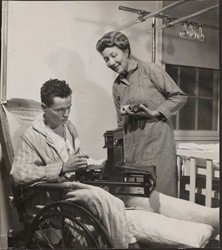 World War II saw an overwhelming number of injured servicemen and women returning from battle to veterans’ hospitals across the United States. In response, the Red Cross established its Arts & Skills program to assist the V. A.’s professional occupational therapists. Renowned textile designer Dorothy Liebes guided the Red Cross to assemble a corps of artists and craftspeople to train volunteers to teach injured servicemen and women a number of different arts and crafts. These ranged from sculpture, bookbinding, and plant grafting, to photography and weaving. Liebes led the charge in126 hospitals across the country. Liz Schott’s presentation chronicles the build-up to the war, Liebes’s response to the Red Cross’s call, her other wartime volunteerism, the soldiers and sailors who benefited from Arts & Skills, and the story of one notable alumnus.
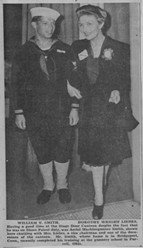 Liz Schott is a retired educational leader who is writing the biography of renowned textile designer and weaver Dorothy Wright Liebes. In June, 2025, Liz received the Biographers International Organization’s Hazel Rowley Prize for her proposal for Useful and Beautiful: The Life of Dorothy Wright Liebes. She lives in Sebastopol, California, with her husband of 39 years, Perry, and their rescued cattle dog, Roxy. Their daughter Francesca lives with her husband Jason near Sacramento and their son Augie is in New York.